 Sugoi Audio
A Tribute to a Legendary Chorus: How SugoiDimension Came to Be
While carving out the low-level algorithms for a new Plugin recently, our team kept circling back to one question: the world is already flooded with Chorus plugins — do we really need to build another one?
Every time we're Arranging or mixing and need to widen a Synth Pad, a DI guitar, or a Vocal Chop, the instinct is to reach for a Chorus.
But the pain point of a traditional digital Chorus is all too obvious — it works by modulating pitch. You get the width, but the sound starts to drift. The whole Track's Center wanders with it; push it a touch too far and the Phase turns to mush; and folding back down to Mono for a check is downright painful to hear.
What we wanted was an effect that delivers a real sense of 3D spatial movement without all that drift. That was the whole reason SugoiDimension came to be.
Back to 1969: searching for the analog soul
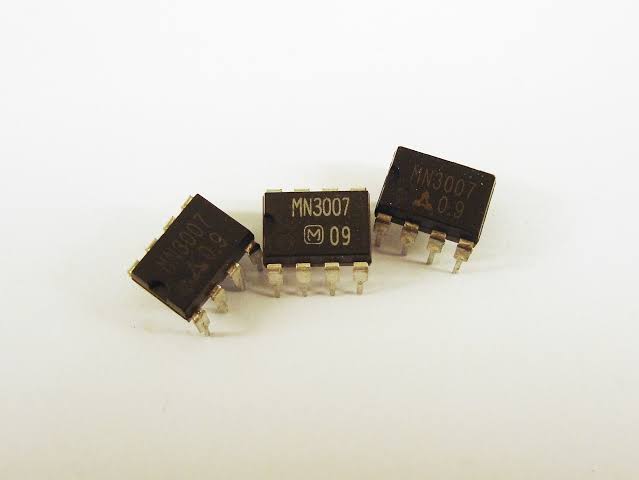
To solve this, we went back and studied the most iconic Dimension and Chorus hardware of the '70s and '80s — and found that their magic all traced back to the same core: the BBD (bucket-brigade) circuit.
The BBD circuit was first developed at Philips Research Labs in 1969. The physics of how it works is fascinating: like a row of people passing buckets of water down a line, it hands the audio signal from one tiny capacitor to the next, one stage at a time. A little charge leaks away at every hand-off — and that "imperfect loss" is precisely what produces the wonderfully musical Soft Saturation and the fine grain of analog noise.
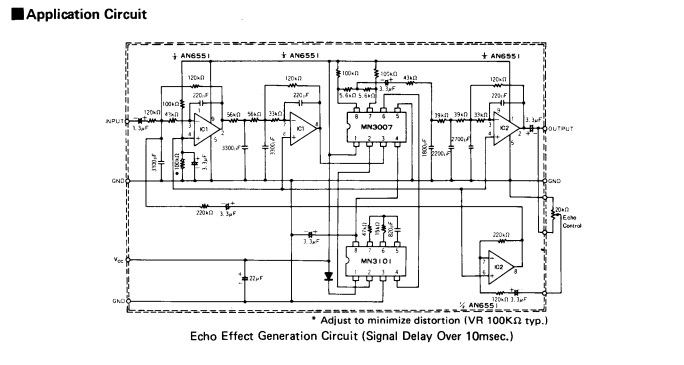
Among these chips, the MN-series that Panasonic produced back in the day — the MN3007 above all — reached legendary status. We decided against shortcuts. Rather than using an ordinary digital algorithm to "fake" that sound, we chose the most hardcore route: modeling an MN3007-class BBD delay line in the digital domain, Stage by stage. We reproduced the physical behavior of charge transfer, and faithfully recreated the 4-Pole filters that wrap around the line — recovering, unadulterated, that analog quality where the top end is smoothed into something warm and beautiful.
Our engineers spent four months recreating this analog chip digitally. It isn't merely a DSP approximation — we cloned the circuit itself, 1:1.
The perfect balance of width and stability
So how did we actually solve the pitch-wobble problem?
When architecting SugoiDimension's DSP, we designed paired BBD delay lines that move in opposite directions. That means the motion on the two sides of the stereo field is complementary and constantly flowing, while the center of the sound cancels perfectly and stays locked in place. The result was genuinely exciting: extremely wide 3D movement, with none of the dizzying Pitch Wobble. Even with Width pushed to 200%, the sound stays solid and never smears.
Zero learning curve: mono to stereo in one click
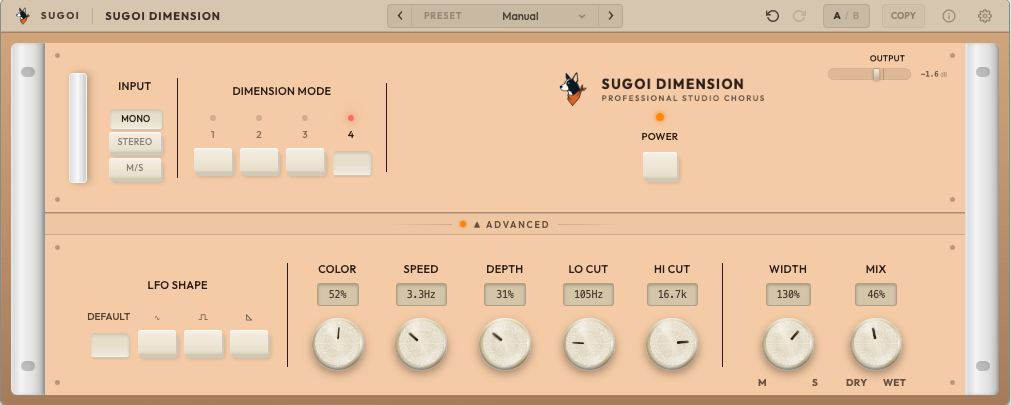
As producers ourselves, the last thing we want when inspiration strikes is to get lost in a maze of parameter menus. So we made the interface radically intuitive, distilled into four one-button modes:
- Subtle — the mode we reach for most: a touch of air, safe on almost any track.
- Classic — the standard "classic Chorus" sound everyone has in their head.
- Wide — a lush, glorious spread built for Pads, keys, and Layered sounds.
- Maximum — the sense of space cranked all the way up, the most dramatic movement.
We also put serious work into Routing flexibility. Whether you feed it a Mono or a Stereo signal, the Input mode lets you convert freely between the two.
And of course there's the classic M-S (Mid-Side) processing mode — it applies the Dimension effect only to the Side signal, so the star in the center (a Lead Vocal or Bass, say) stays absolutely clear and up front.
Or, if you love to fine-tune your tone, we built in the Advanced panel too — Color, Speed, Depth, and Lo/Hi Cut are all there for the tweaking.
Final thoughts
Building this Plugin felt a lot like a conversation with the analog engineers of forty years ago. You no longer have to scour the second-hand market for aging silicon — that warmth and that flow are right there inside a modern DAW.
SugoiDimension has now finished all of its debugging and packaging, and ships as AU, VST3, AAX, and Standalone (running on both macOS and Windows).
If you're fed up with digital Chorus plugins that smear your sound, head to our website and download the 30-day free trial. There's a launch early-bird price of $14.99 — try it on your Synth or guitar, and hear a legendary classic sound that spans fifty years.