AI-Powered

Kiyome. 清め

Your mix sounds muddy.
Kiyome knows exactly where— and where not — to cut.

AI-powered de-mudding that removes low-mid buildup while preserving warmth. Zero latency. 13 instrument-specific models.

$49.99 $29.99 Introductory Price

30-day trial · No credit card · One-time purchase · Free updates forever

AU & VST3 · macOS 11.0+ · Windows 10+ Already purchased? Download here

The Name

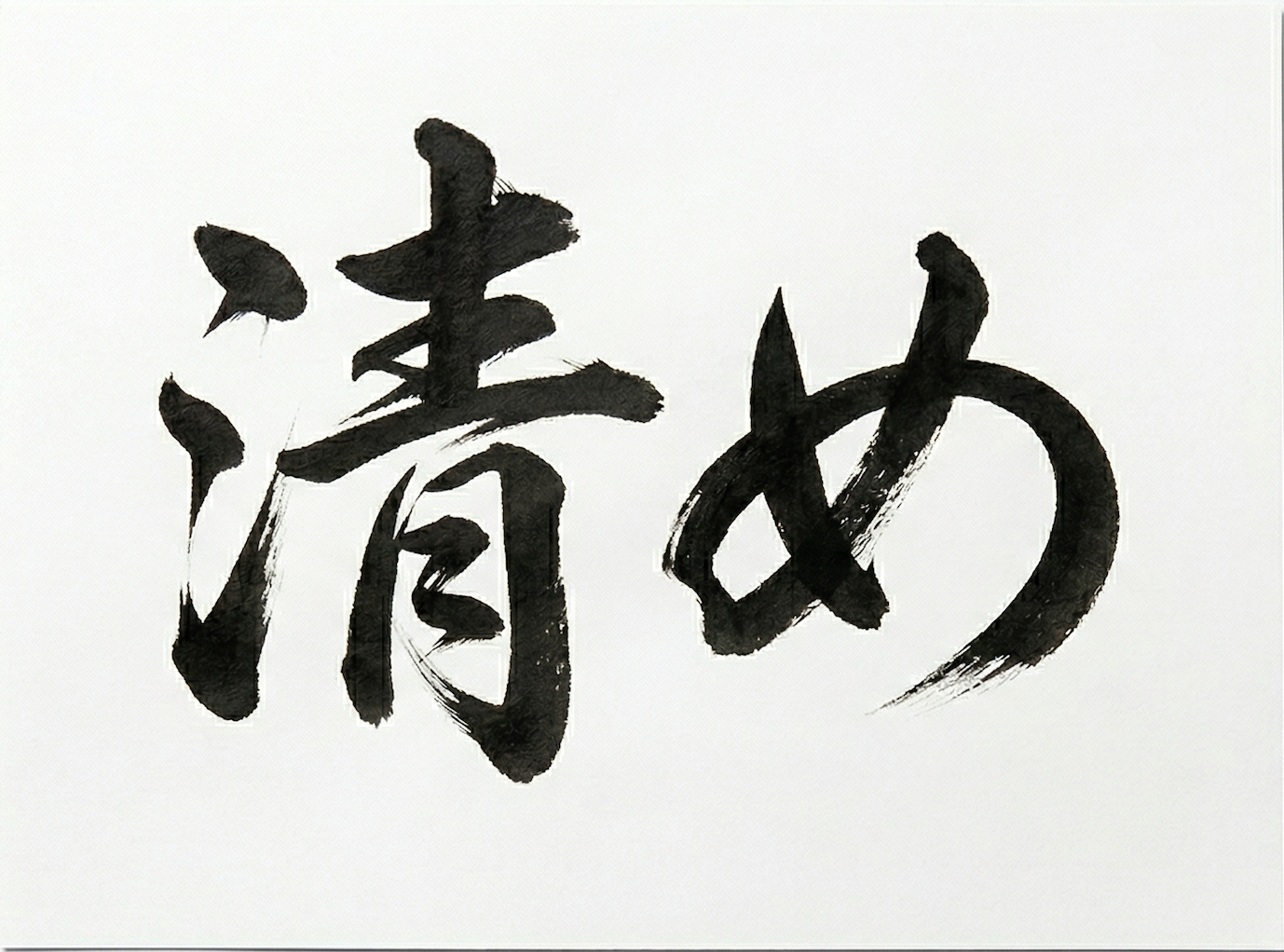
Kiyome — to cleanse, to purify.

In Japanese tradition, 清め (kiyome) is the act of removing impurities while preserving what matters. A master craftsman doesn't destroy to rebuild — they carefully remove only what doesn't belong.

That's exactly what this plugin does to your mix. It finds the mud — and gently takes it away. The warmth, the body, the soul of your sound stays untouched.
清め

Why does every mix sound muddy?

Low-mid buildup between 60–900 Hz is the most common mixing problem. Every instrument contributes energy in this range — vocals, guitars, keys, drums. Stack them together and your mix turns into soup.

The old way vs. Kiyome.

Manual EQ sweeping is tedious, inconsistent, and easy to overdo. Kiyome replaces the guesswork with instrument-aware AI.

Manual EQ Sweep

Boost a narrow band. Sweep through frequencies. Listen for mud. Cut. Repeat for every track.

  • You manually guess which frequency is problematic
  • Cut is fixed at one frequency — even when the problem moves
  • Doesn't know if it's cutting mud or warmth
  • Same setting for every instrument, every song

Kiyome

Select your instrument, turn the Depth knob, and the AI continuously analyzes your audio to find and cut mud exactly where it lives — not where you guessed it would be.

  • Cuts move with your audio — as the resonance shifts, so does the EQ
  • 13 instrument models know where mud hides in each instrument's unique frequency profile
  • Confidence gating protects warmth — below 5%, nothing is cut
  • Every note, every chord — different resonance, different cut

Traditional EQ is a static tool — you set it and hope for the best. Kiyome is a living process that tracks your audio's resonant peaks in real-time, adapts to what's playing, and makes intelligent decisions about what to cut and what to protect. All at zero latency.

Hear the Difference

Before & After

Toggle between bypass and Kiyome to hear the resonance removal in action.

Bypass
0:00 / 0:00

How to Use

Three knobs. That's it.

No complex routing. No steep learning curve. Insert Kiyome, choose your instrument, and let the AI do the heavy lifting.

1

Select Your Instrument

Choose from 13 instrument-specific AI models — Male Vocal, Female Vocal, Kick, Snare, Toms, Overheads, Electric Bass, Synth Bass, Acoustic Guitar, Electric Guitar, Keys, Strings/Brass, or Full Mix. Each model is trained to understand that instrument's unique mud patterns.

2

Adjust Depth, Speed, Tone

Depth controls how aggressively Kiyome cleans. Speed sets how fast it reacts to changes. Tone adjusts the EQ bandwidth — narrow for surgical precision, wide for broad cleaning.

Need more control? Each of the 5 frequency bands has its own Sensitivity knob — boost it to make Kiyome more aggressive on that band, or dial it back to leave that range untouched. You can also bypass individual bands entirely.

3

See What's Being Cleaned

Kiyome shows you exactly what it's doing. The 5 frequency bandsSub, Low, Low Mid, Mid, Upper Mid — each display their own EQ curve in real-time. Watch the curve dip as the AI detects and removes mud. Toggle Delta Listen to hear only what's being removed — if it sounds like mud, you're on track.

Pro Tip

Teach Kiyome your audio

Click Learn, play 5 seconds of your track, and Kiyome analyzes the spectral profile of your audio. It then adapts its sensitivity per frequency band — more aggressive where resonance is strong, gentler where it's not. The result: smarter, more musical cuts tailored to your specific material.

LEARN
LEARNING...
LEARNED

Double-click Learn to clear the profile

Add Character After Cleaning.

Three legendary console characters. Applied after de-mudding, so you color a clean signal — not a muddy one.

Warm

Neve 1073

Subtle harmonic saturation. Adds body and air.

Punch

API 2520

Tightens transients. Makes drums snap.

Tape

Studer A800

Vintage saturation with HF softening.

Everything in one plugin.

De-mud, color, and control — without the complexity.

13 AI Models

Each instrument has its own neural network. Male Vocal ≠ Kick ≠ Strings.

Warmth Protection

Confidence gating: below 5%, nothing is cut. Your warmth stays.

Color System

Neve warmth. API punch. Tape glue. Three console characters.

L/R & M/S Processing

Process left/right or mid/side independently. Adjustable Stereo Link from 0–100% for precise stereo field control.

5-Band Detection

Sub, Low, Low-Mid, Mid, Upper-Mid — each band independently detects and removes its own mud problems.

Zero Latency

Minimum-phase EQ. No delay. Live safe.

38 Factory Presets.
Ready to use.

Organized by instrument, genre, and creative intent. Every preset designed by professional mixing engineers.

Vocals Drums Bass Guitar Keys Strings Mix Bus Genre Creative Color

System Requirements

macOS

  • macOS 11 (Big Sur) or later
  • Apple Silicon (M1/M2/M3/M4) & Intel supported
  • AU, VST3 & Standalone
  • 64-bit only
  • ~50 MB disk space
  • 4 GB RAM minimum

Windows

  • Windows 10 or later
  • 64-bit (x86_64)
  • VST3
  • ~50 MB disk space
  • 4 GB RAM minimum

Note: Pro Tools (AAX) is not currently supported.

Questions? Answers.

Everything you need to know about Kiyome.

Does Kiyome add any latency? +

No. Kiyome uses minimum-phase EQ filters, which add zero samples of latency. It's completely safe for live performance and real-time mixing.

Can I use it for live performances? +

Yes. Zero latency and low CPU usage make Kiyome ideal for live sound. Insert it on any channel and let the AI handle mud detection in real time.

How is it different from Soothe 2? +

They solve different problems. Soothe 2 targets resonances — ringing frequencies that poke out. Kiyome targets mud — the broad low-mid buildup between 60–900 Hz that makes mixes sound thick and undefined. They're complementary tools.

How is it different from a regular EQ? +

A manual EQ sweep takes 5–10 minutes per track: boost a narrow band, sweep through frequencies, listen for mud, cut, and repeat. Kiyome does this in 30 seconds with instrument-specific AI models that know exactly where mud lives for each source.

What does the Confidence display mean? +

Each of the 5 frequency bands has its own color-coded EQ curve. When the AI detects mud, you'll see the curve dip in real-time. The deeper the dip, the more confident the AI is. Below 5% confidence, nothing is cut — your warmth is always protected.

How does the trial work? +

The trial gives you 30 days of full functionality — every feature, every model, no limitations. No credit card required. After 30 days, the output will mute but the UI remains accessible so you can purchase and continue right where you left off.

Does it support Windows? +

Kiyome supports macOS (AU, VST3, Standalone) and Windows (VST3). macOS requires 10.15 Catalina or later. Windows requires Windows 10 or later (64-bit).

Can I use it on a mix bus? +

Absolutely. Kiyome includes a Full Mix model designed specifically for mix bus use, plus M/S processing so you can clean mid and side independently. The Mastering preset is a great starting point.

Get Kiyome

$49.99 $29.99
Introductory Price
  • AI de-mudding engine
  • 13 instrument models
  • 5-band detection (60–900 Hz)
  • Neve / API / Tape color system
  • L/R & M/S independent processing
  • 38 factory presets
  • Delta Listen & Auto Gain
  • AU + VST3 + Standalone
  • Free lifetime updates
  • 30-day free trial

One-time purchase. No subscription. Free updates forever.